I’ve been putting this one off.
Not because it’s particularly difficult work, but because I honestly don’t know what to do with any of it. And when you don’t know where to begin, sometimes it’s easier to just pretend the problem doesn’t exist.
I’ve always been a picture person. I’ve made a dozen scrapbooks over the years, filled with memories of when our girls were little. Those scrapbooks aren’t going anywhere. They’re staying with me.
But then there are the boxes of photographs. The computer hard drives. The floppy disks. The little memory cards. And the videotapes.
Oh, the videotapes.
I’ve been saying for at least ten years that someday I’m going to organize all of this. Someday I’ll sort through the pictures, figure out what’s on the various drives, and get everything organized.
Well, someday hasn’t arrived yet.
And now, as we’re downsizing and trying to figure out what comes with us into this next chapter, I’m realizing that this isn’t just about organizing pictures. It’s about deciding what happens to a lifetime of memories when you’re not sure anyone else wants them.
A Hundred Years of Memories
When my dad died, I inherited all of his photographs.
I went through them and discarded the ones that were simply beautiful scenery from places he had visited. But the pictures with people in them? The ones I recognized or thought someone else might appreciate? Those were harder.
I couldn’t bring myself to throw them away.
I gave quite a few to people I thought would treasure them, but I still have boxes of his photographs.
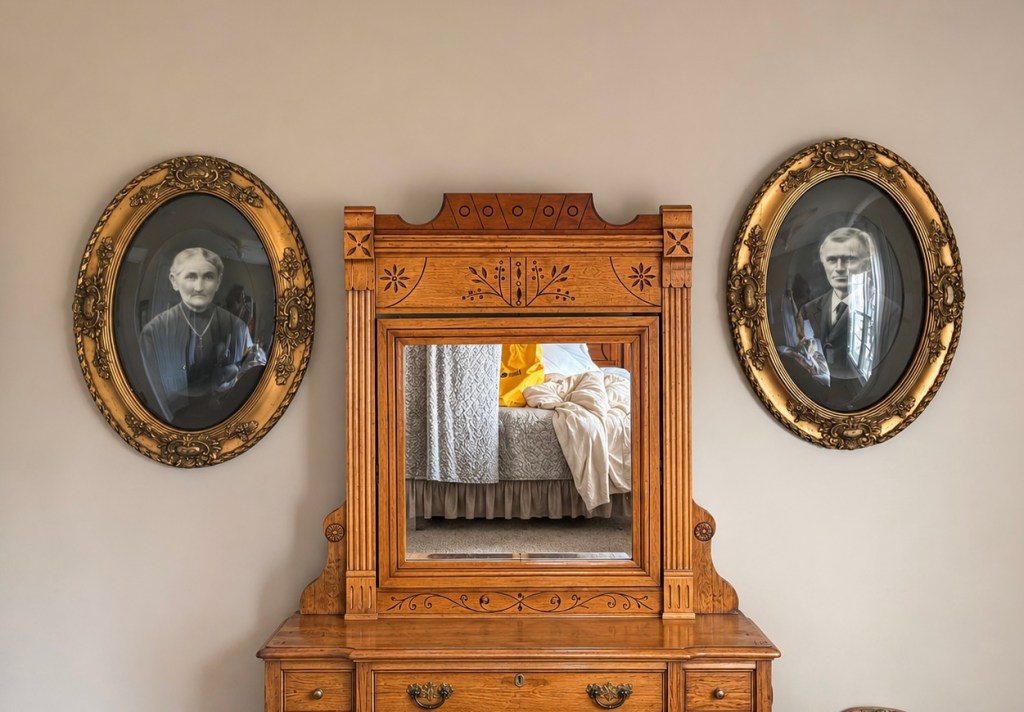
And then there are the two pictures hanging on the wall in our upstairs bedroom.
They’re portraits of my great-grandparents. My grandmother brought them with her when she came over from Germany on a boat in 1928.
Think about that for a minute.
Those pictures crossed an ocean with her almost 100 years ago. About thirty years ago, I had them framed, and they’re absolutely gorgeous. The portraits themselves are probably twelve by sixteen inches, and they’re quite large in their frames.
They’re not ordinary photographs. They appear to be some kind of charcoal portraits or charcoal photographs, although I honestly don’t know exactly what they are.
What I do know is that they’re unique, they’re beautiful, and they’re a piece of our family history.
I’ve asked my daughters if they want them.
They don’t.
I’ll ask my brother, but I suspect his answer will be the same.
And then what?
What Do You Do With a Photograph That Was Important Enough for My Grandmother to Give Up Precious Trunk Space to Protect, but Now, Nobody Wants?
I had a large photograph of my great aunt, probably taken in the 1940s. It was about twelve by sixteen inches.
I met my aunt when I was two years old, so I have no real memories of her.
Nobody in the family wanted the photograph.
I took a picture of it so I’d have a digital copy, and then I put the original in the burn pile.
That sounds horrible, doesn’t it?
But what else was I supposed to do with it?
I didn’t want to throw it in the trash, and I certainly wasn’t going to take it to Goodwill. It wasn’t something another person would necessarily want to hang on their wall, and I couldn’t find anyone in the family who wanted it. She had no children and all her siblings were gone.
So I kept the image and let the original go.
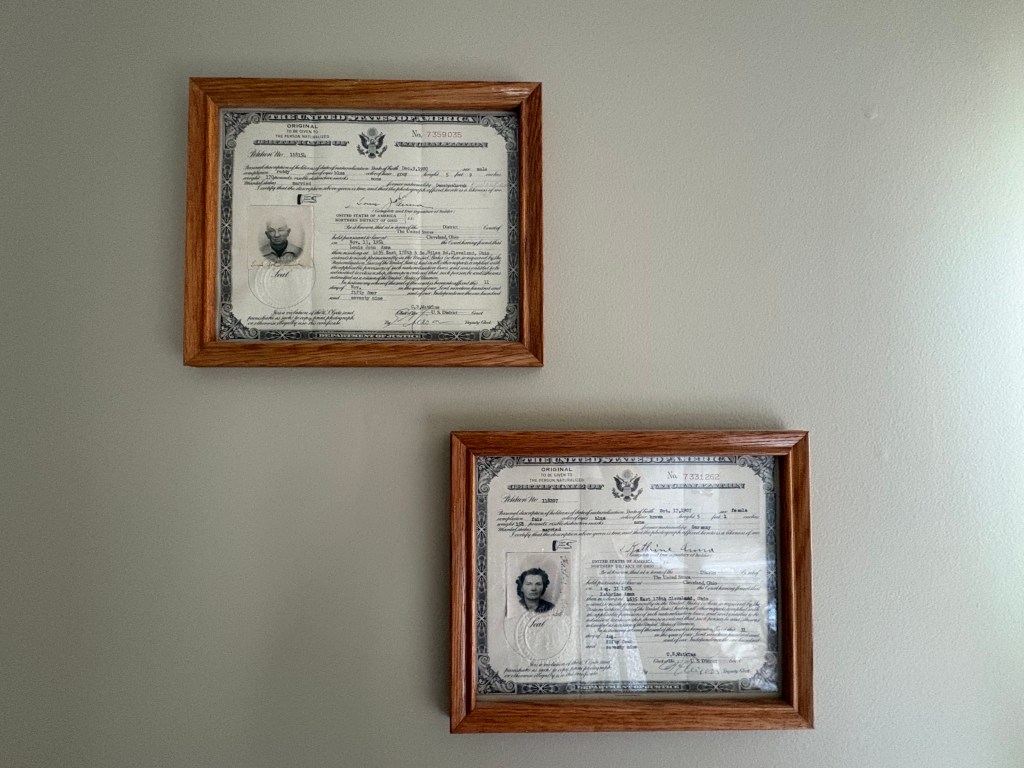
I’ve also uploaded a lot of family information and photographs to Ancestry, partly because I want future generations to be able to find their history. I’ve got my grandmother’s green card and my grandparents’ naturalization papers, too. Those are things I’m not ready to part with.
But it makes me wonder.
I’m not getting rid of those things now, but someday, who’s going to want them?
Our daughters don’t want the portraits. My brother probably won’t want them either. And eventually, someone will have to decide what happens to them.
I keep coming back to that question.
What happens to family history when the next generation doesn’t want to inherit it?
Back Then, We Didn’t Take Pictures Like We Do Today
There’s another part of this that makes sorting through these things especially difficult.
Today, we take pictures of everything.
We take ten pictures of the same moment, delete the ones we don’t like, and take ten more. We record videos on our phones, capture everyday conversations, and document things we probably won’t even remember taking pictures of.
Facebook has become a sort of chronological time capsule. You can scroll back ten or fifteen years and see what you were doing on a particular day. It reminds you of birthdays, vacations, family gatherings, and ordinary moments you might otherwise have forgotten.
But we didn’t have any of that when our girls were little.
We had film.
We bought a roll, loaded it into the camera, took our pictures, and eventually paid to have the film developed. You never knew quite how they would turn out until you picked up the prints.
And videotapes? Those were a whole other production. You bought the cassette, got the camcorder ready, checked the battery, and recorded the moments you thought were worth preserving.
We weren’t taking dozens of pictures every day. We weren’t recording every little thing our children did.
We were busy living our lives.
The photographs and videotapes we have now represent just a handful of moments from an entire childhood.
Sometimes, those handfuls are all we have left of a particular stage of our children’s lives.
And that’s what makes this so difficult.
Those videotapes aren’t just moving pictures. They’re the sound of little voices. They’re the way the girls talked when they were small, the sound of their laughter, and the little things they did that we probably thought we’d never forget.
Some of those moments exist nowhere else.
I can’t go back and record them again.
I can’t take another picture of our girls at five years old or capture a conversation from when they were learning to talk.
Those moments are gone, except for the pieces we managed to preserve.
And now I’m supposed to decide which pieces to keep?
Digital Isn’t the Same as the Original
People will tell you to digitize everything.
And yes, I understand the value of that. A digital copy preserves the image and makes it easier to share. It also means future generations can access those memories without having to store boxes of old photographs.
But here’s the thing.
A digital copy isn’t the same as the original.
It doesn’t feel the same in your hands. It doesn’t have the texture of the paper or the marks of its age. It doesn’t carry the same sense of history as a photograph that’s been tucked away for a hundred years.
That original portrait of my great-grandparents isn’t just a picture of two people I’ve never met.
It’s something my grandmother carried across an ocean when she left Germany to begin a new life.
It’s a physical connection to her, to them, and to a time I can only imagine.
I can scan it, save it to a computer, and upload it to Ancestry. I can make sure the image survives.
But the original is still the original.
And I think that’s why I struggle with the idea of letting these things go. I know that preserving the image is practical, but I can’t quite convince myself that preserving the image is the same as preserving the thing itself.
Maybe that’s sentimental.
Maybe that’s just human.
The Weight of a Photograph
This is one of the parts of downsizing I haven’t figured out yet.
I’ve made peace with getting rid of furniture, kitchen gadgets, clothes, and all sorts of things we’ve accumulated over the years. Some decisions are harder than others, but eventually, I can usually see the logic in letting something go.
Photographs are different.
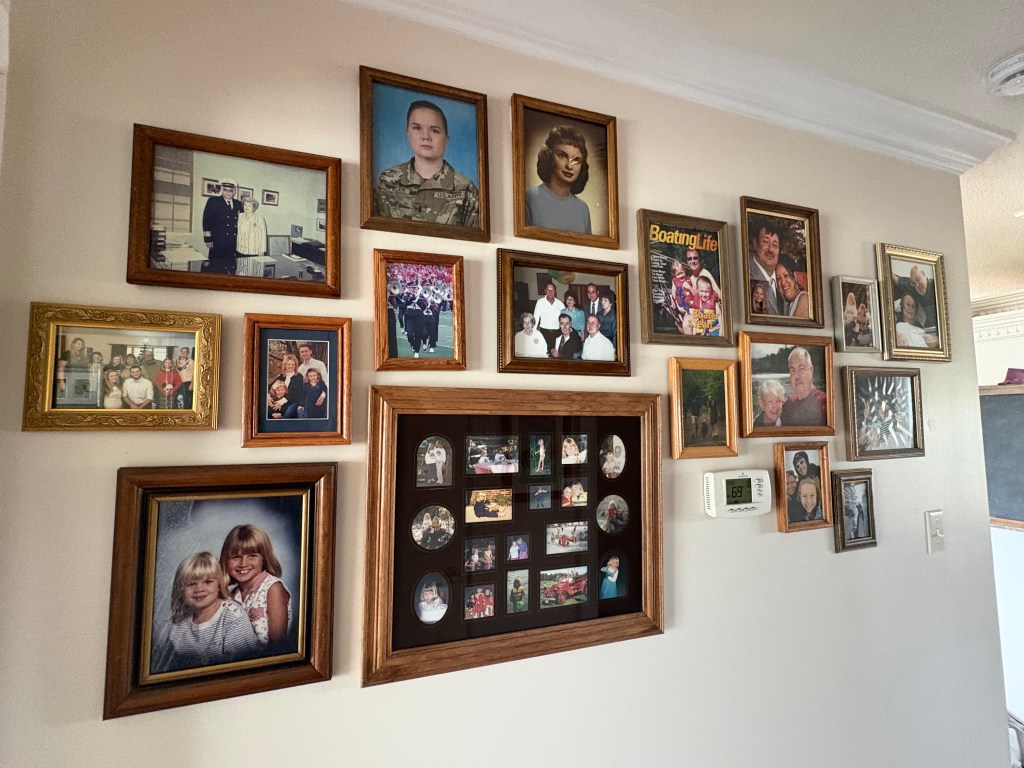
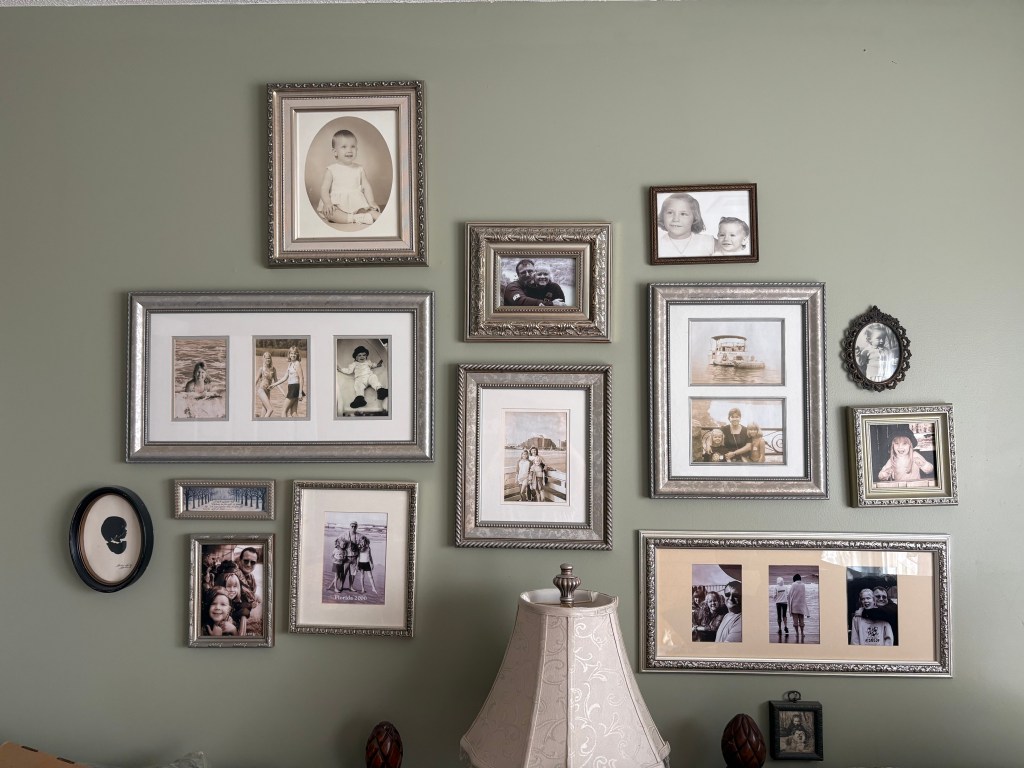
They don’t take up much room individually, but collectively, they represent a lifetime. My childhood. Our girls’ childhoods. My parents’ lives. Generations of people who came before me.
And I’m the one holding on to them.
I’m the one who knows who some of the people are, who can recognize a face, or who remembers the story behind a particular photograph.
What happens when I’m no longer here to explain any of it?
I don’t want my daughters to inherit boxes of photographs they feel obligated to keep. I don’t want them to face the same dilemma I’m facing now, wondering what to do with things they don’t have the space for and can’t quite bring themselves to throw away.
But I also don’t want to be the person who casually discards something that might have mattered to someone, somewhere, someday.
I know I can’t preserve everything forever.
I know that eventually, these things have to go somewhere, whether that’s into the hands of someone who wants them, into a digital archive, or into a burn pile.
I just haven’t figured out how to decide which is which.
And I haven’t even opened the first box.
For now, the scrapbooks are staying. The portraits of my great-grandparents are still hanging on the wall. The boxes of photographs are still sitting where they’ve been sitting for years.
Maybe the first step is simply admitting that I don’t have an answer yet.
Because downsizing isn’t always about deciding what you can live without.
Sometimes, it’s about deciding what you can bear to leave behind.
And sometimes, the heaviest things in the house aren’t the furniture or the boxes.
Sometimes, it’s a photograph.


Leave a Reply