I’ve always believed that being happy isn’t about having what you want.
It’s about wanting what you have.
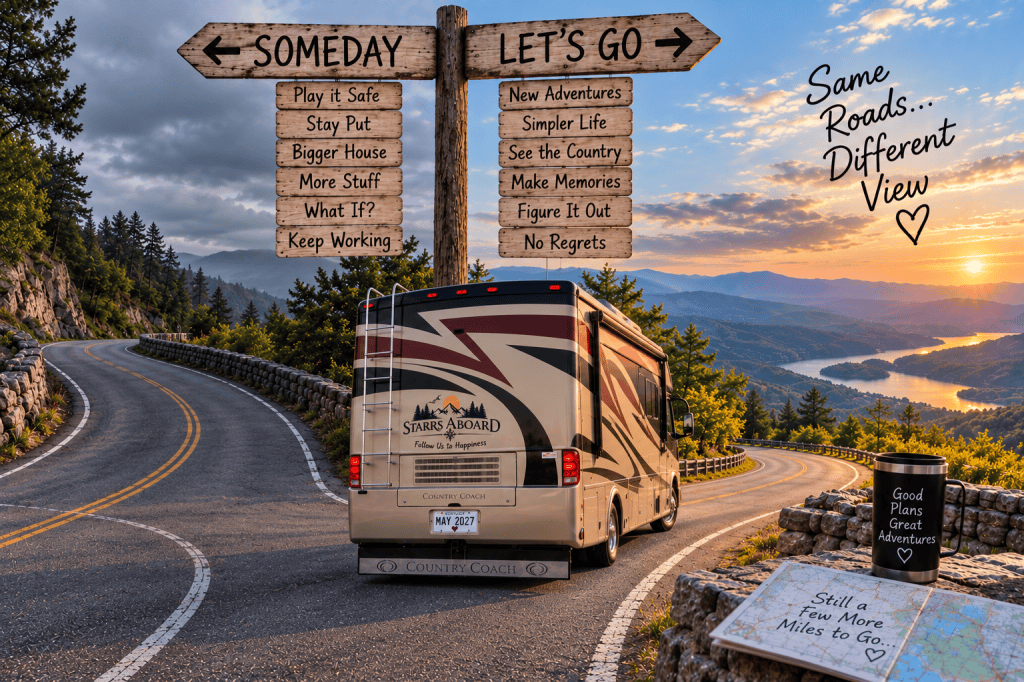
And somewhere along the way this summer, that little saying started to mean a whole lot more to me.
Our daughter got married in June, and we had already planned to take our motorhome to Ohio and spend the week there for the wedding.
Then life threw us a curveball.
Ed was diagnosed with prostate cancer.
His treatment and surgery took us to the Cleveland Clinic the week after the wedding, so our one-week stay in Ohio turned into three.
Three full weeks living in the motorhome.
During those three weeks, we went through two incredibly emotional events. We watched our daughter get married and begin a new chapter of her life, and then we faced Ed’s cancer and surgery together.
And somewhere in the middle of all of that, my priorities started to shift.
I realized something incredibly simple.
I really loved spending all that time with my husband.
Not just vacations. Not just weekends. Not just the few hours left at the end of a workday.
I liked waking up with him. Having coffee together. Figuring out what we were going to do that day. Sitting around doing absolutely nothing together.
Just…being together.
And I started wondering:
Why was I spending so much of my life at work?
Ed had talked about traveling full-time in an RV for years. I’d always listened.
Apparently, somewhere during those three weeks, I finally started listening a little harder.
But I didn’t tell him.
Because I knew exactly what would happen if I casually said, “Hey, maybe we should sell the house and live in the motorhome.”
He’d probably have a FOR SALE sign in the yard before I finished the sentence.
So I started researching quietly.
Health insurance. Social Security. Retirement accounts. Taxes. Campgrounds. Fuel. What we’d actually need to live on.
I ran numbers.
And then I ran some more.
Eventually, I realized:
I think we can actually do this.
So I finally told Ed.
As expected, convincing him was NOT the problem.
Then we met with our financial advisor.
His answer?
“It won’t work. It won’t fund itself.”
While he didn’t literally throw his arms up in the air, his voice certainly did.
But when I looked at the projections, I saw something different. No, the plan wasn’t going to fund itself forever.
We would eventually have to start spending some of the money we had worked all those years to save.
And suddenly I found myself wondering…wasn’t that what we had been saving it for?
Were we trying to win retirement?
Was someone going to give us a trophy at 90 because we’d successfully avoided spending our own money?
I didn’t want us to be irresponsible or run out of money.
But I also didn’t want to spend the healthiest years we had left working and waiting for a “someday” that might come too late.
Maybe this was someday.
So I kept researching.
I found a retirement planning program that let me change the assumptions and run different scenarios myself.
What if we spend more? What if we spend less? What if healthcare costs more than we expect? What happens if the market doesn’t cooperate?
I ran hundreds of scenarios.
And the more I played with the numbers, the more something became clear.
We’re not Moses climbing the mountain and carving our retirement plan into stone.
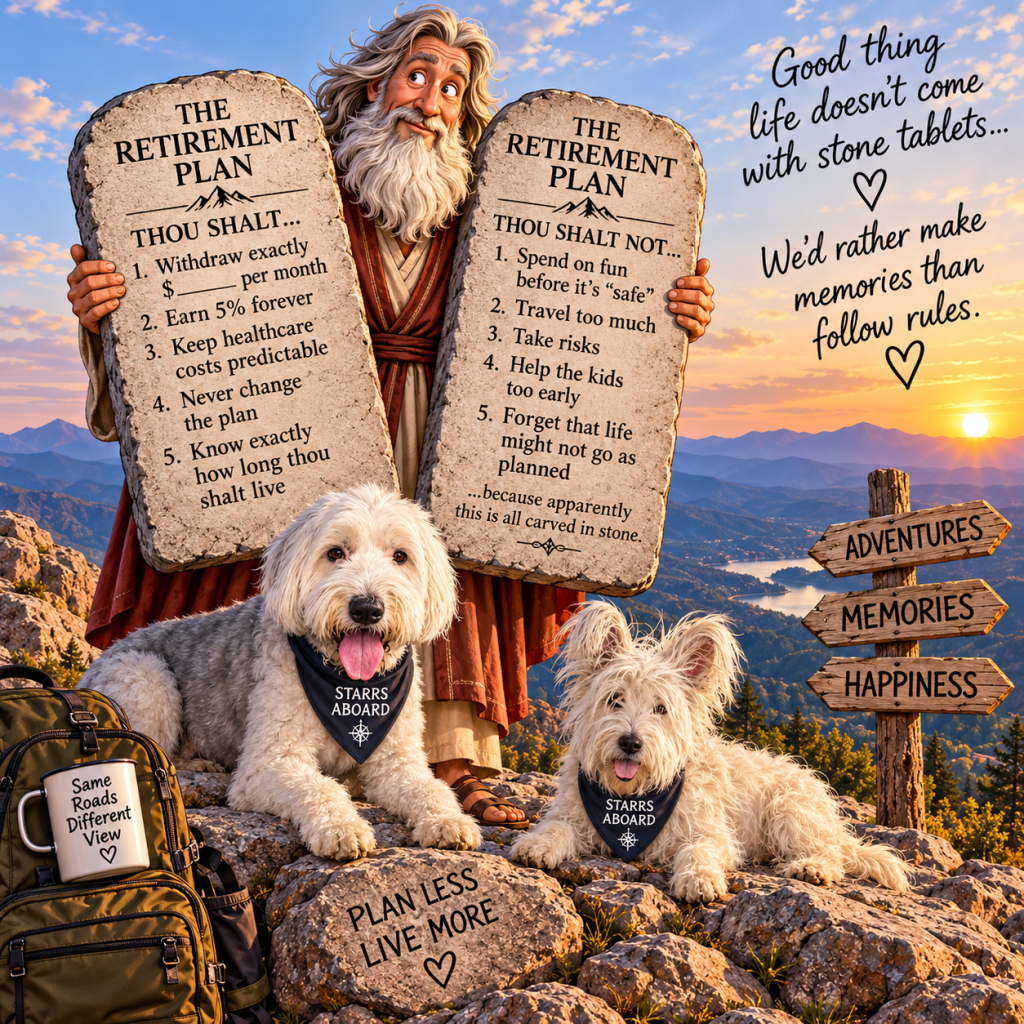
We’re making the best plan we can based on what we know today.
Things will happen.
Life will change.
Our health will change.
Our expenses will change.
And when they do?
We’ll adjust.
Maybe we’ll travel less someday. Maybe we’ll settle down sooner than we expect. Or maybe we’ll still be rolling down the highway in our 80s, driving our children crazy.
Who knows?
The goal isn’t to predict every dollar we’ll spend for the next 30 years.
It’s to plan responsibly, prepare for the unexpected, and then actually live the life we’ve been saving for.
Because those three weeks in Ohio taught me something no retirement calculator could.
A wedding.
Cancer.
Surgery.
Happiness, fear, exhaustion and relief.
And through all of it, I realized just how much I love spending time with my husband.
Every minute we get together is priceless.
And every day we put this off has a cost too.
It’s just not one that shows up in a retirement calculator.
So maybe the question was never really…
Can we afford to do this?
Maybe the question we should have been asking all along was…
How long can we afford to wait?


Leave a Reply